
Last updated October 31, 2026
 Home additions & ADU
 Kitchen remodeling
 Bathroom remodeling
 Roofing
 Windows & doors
 Driveway & pavers
 Fence
Free written scope consultation - allowances, timeline, and change-order rules on paper before a single trade is scheduled
Construction Cost Breakdown: The Orange Homeowner’s Reference for 2026
The national average cost for a kitchen remodel means nothing in Orange, CA. Local permit fees alone can add $3,000 to $8,000 before a single cabinet is touched. Orange County labor rates run 18 to 30 percent above the national baseline, and California’s material compliance requirements, including Title 24 energy standards and seismic fastening codes, add cost layers that generic estimator tools simply do not capture. This guide walks through real 2026 numbers by project type, explains how Orange’s permit system calculates fees, shows what contractor overhead should actually look like, and gives you a framework for comparing bids line by line so you can evaluate pricing with precision instead of hope. For more guides & resources on local construction, see our blog.
Quick Answer
In Orange, CA, homeowners should budget these mid-range 2026 costs: kitchen remodels at $350 to $575 per square foot, bathrooms at $280 to $450 per square foot, ADUs at $275 to $420 per square foot all-in, roof replacements at $7 to $14 per square foot of roof area, and window replacements at $750 to $1,600 per opening installed. These figures include local Orange permit fees, Orange County labor rates, and standard contractor overhead. The single biggest variable in any Orange bid is not materials, it is the scope of work buried in the line items.
Styles & brands we work with
Table of Contents
- Kitchen Remodel Costs in Orange: The Real 2026 Numbers
- Bathroom Remodel Pricing: What Orange Homeowners Actually Pay
- ADU Construction Costs in Orange: The Full Breakdown
- Roof Replacement Costs in Orange: Material and Labor Reality
- Window Replacement Costs: Orange Market Pricing Explained
- How Orange’s Permit System Drives Your Total Cost
- Contractor Overhead and Margin: What’s Reasonable in Orange County
- How to Compare Bids Line by Line Without Losing Your Mind
Kitchen Remodel Costs in Orange: The Real 2026 Numbers
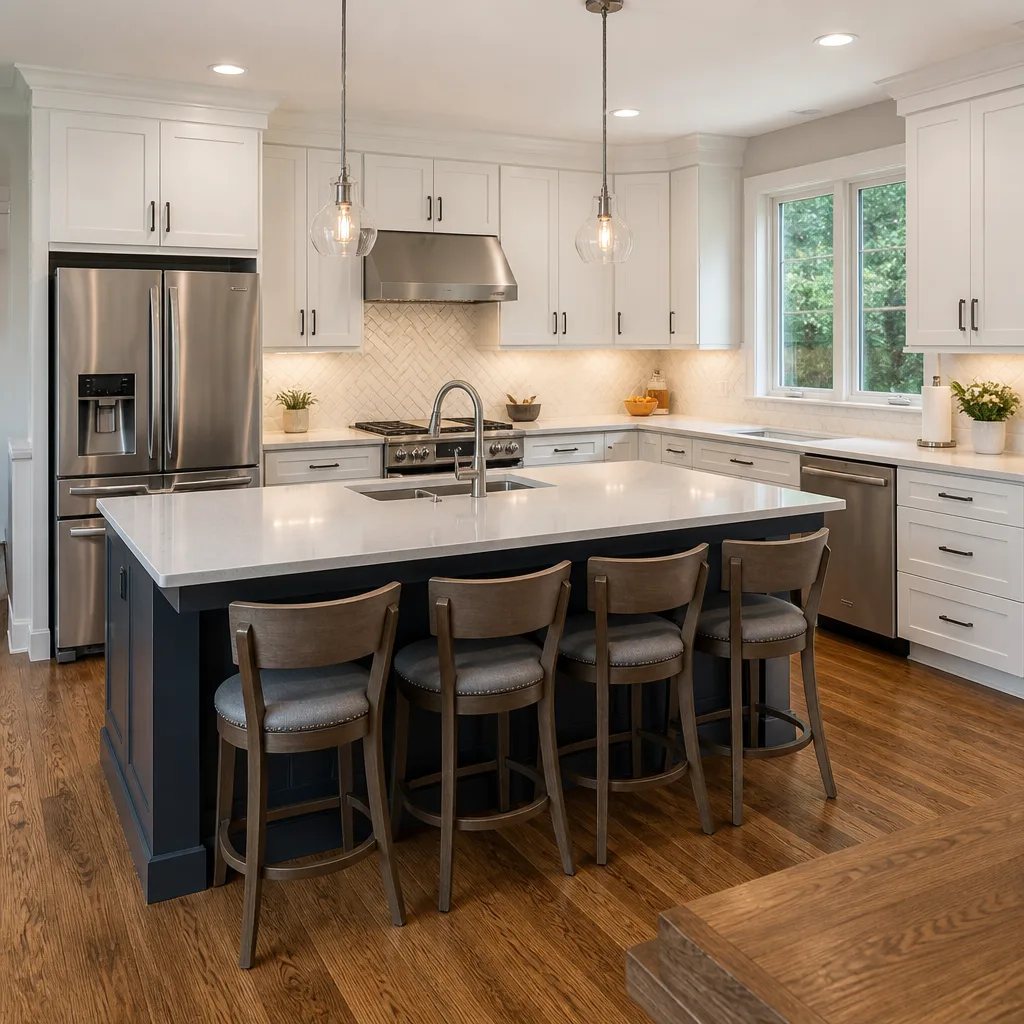
A mid-range kitchen remodel in Orange runs between $70,000 and $115,000 for a typical 200-square-foot space. That works out to roughly $350 to $575 per square foot, and the spread is driven by cabinetry grade, countertop selection, appliance allowance, and how much wall movement the layout requires.
Here is what that money buys in Orange’s market. Semi-custom cabinetry from KraftMaid or Wellborn typically lands at $18,000 to $32,000 for a standard L-shaped or galley layout with an island. Cambria quartz countertops, a popular upgrade over entry-level granite, add $6,000 to $11,000 including fabrication and installation. Appliance packages with a 36-inch range, wall oven, and drawer microwave run $9,000 to $15,000 depending on whether you stay with mainstream brands like GE Profile or step up to premium lines. Plumbing fixtures from Kohler or Moen in a kitchen with a pot filler and pull-down faucet typically total $1,800 to $4,000. Flooring, drywall repair, electrical updates, lighting, backsplash tile, and paint absorb the remainder.
One detail Orange homeowners often miss is the impact of the home’s electrical panel. Many mid-century and 1970s homes in Orange neighborhoods still run 100-amp panels. A kitchen remodel that adds double ovens, an induction cooktop, and a beverage refrigerator frequently triggers a panel upgrade to 200 amps, which adds $3,500 to $6,000 to the job. Titles don’t mention that line item. Good contractors flag it during the estimate visit.
Sample Kitchen Remodel Cost Breakdown
- Cabinetry (semi-custom, installed): $18,000 to $32,000
- Countertops (Cambria or similar, fabricated): $6,000 to $11,000
- Appliances (mid to premium package): $9,000 to $15,000
- Plumbing fixtures and rough-in work: $1,800 to $4,000
- Electrical work, lighting, panel upgrade if needed: $4,500 to $9,500
- Drywall, paint, flooring, backsplash: $8,000 to $15,000
- Orange permit fees (valuation-based): $2,000 to $5,500
- General contractor overhead and profit: $14,000 to $23,000
Those numbers reflect what we’ve seen across Orange projects in 2025. The kitchens that land at the lower end tend to be paint-in-place layouts with existing plumbing locations untouched. The upper end involves load-bearing wall removal, custom hood venting, or full-layout changes.
Bathroom Remodel Pricing: What Orange Homeowners Actually Pay
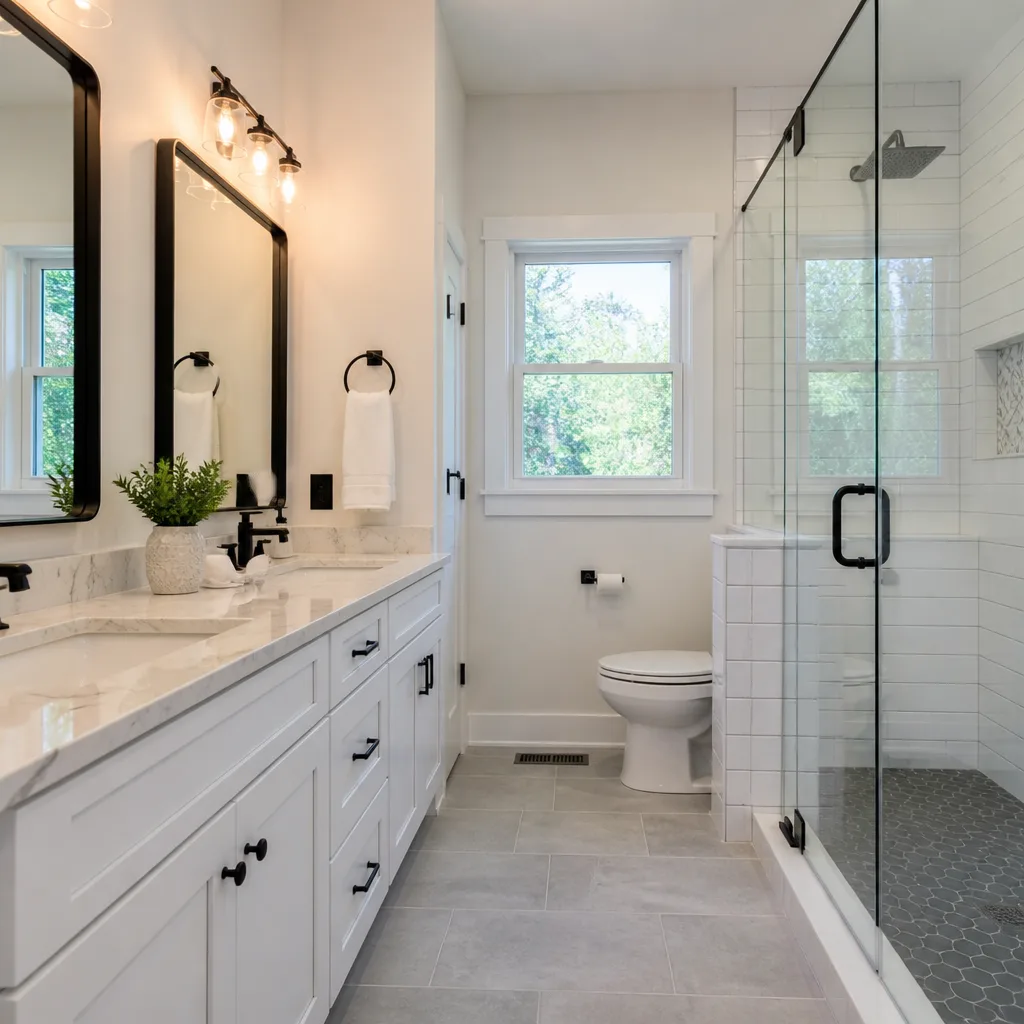
A full bathroom remodel in Orange runs $28,000 to $45,000 for a standard 40-to-60-square-foot hall bath. Master bathrooms with walk-in showers, dual vanities, and separate water closets land between $50,000 and $85,000. The per-square-foot math, $280 to $450, looks high compared to national averages because Orange County’s plumbing and tile labor rates are among the highest in California outside the Bay Area.
The wet work drives the cost. A Schluter waterproofing system properly installed under a custom tile shower runs $4,000 to $8,000 in labor and materials alone, and skipping that step is how Orange homeowners end up with mold behind tile five years later. Frameless glass shower enclosures add $2,500 to $5,500. Vanities from KraftMaid or custom built-ins range from $2,500 to $7,000. Toto toilets, a common upgrade in Orange remodels, add $600 to $1,400 per unit over builder-grade fixtures.
Plumbing relocation is the silent budget killer. Moving a toilet or shower drain even four feet across a concrete slab-on-grade foundation, which covers a large share of Orange’s housing stock, costs $3,000 to $6,000 per fixture because it requires cutting, re-routing, and patching concrete. Homes built on raised foundations, more common in the older tracts around the Orange Circle, are less expensive to re-plumb at $1,500 to $3,000 per fixture.
Bathroom Remodel Cost Ranges
- Hall bath, cosmetic refresh (no fixture moves): $18,000 to $26,000
- Hall bath, full gut and remodel: $28,000 to $45,000
- Master bath, full gut with layout changes: $50,000 to $85,000
- Schluter waterproofing system in shower: $4,000 to $8,000
- Frameless glass shower enclosure: $2,500 to $5,500
- Plumbing relocation on slab foundation: $3,000 to $6,000 per fixture
ADU Construction Costs in Orange: The Full Breakdown
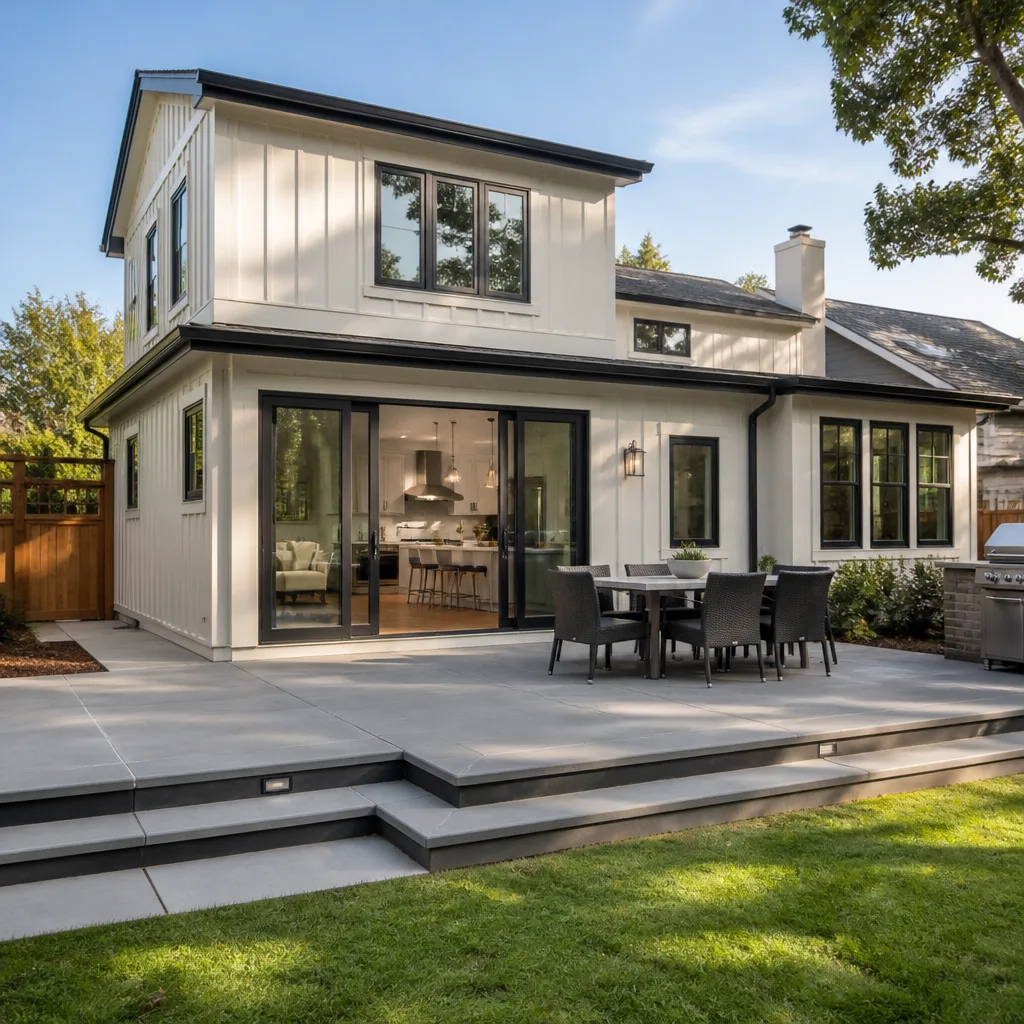
Accessory dwelling units in Orange cost between $275 and $420 per square foot all-in for 2026, meaning a 600-square-foot one-bedroom ADU runs $165,000 to $252,000 and a 1,000-square-foot two-bedroom unit lands between $275,000 and $420,000. These numbers include design, engineering, permits, foundation, utility connections, and all finishes. Anyone quoting below $250 per square foot in Orange is either building with bottom-tier materials or has not priced California’s Title 24 energy requirements correctly.
Several Orange-specific factors push ADU costs above national averages. The city’s design standards require specific setbacks, height limits, and architectural compatibility with the primary home, which occasionally forces a custom design where a pre-engineered plan would have worked elsewhere. Soil conditions across much of Orange require standard spread footings, but some properties near the Santiago Creek floodplain trigger additional geotechnical review and pier depths that add $5,000 to $12,000. Utility connections, particularly sewer laterals, are often aged in Orange’s older neighborhoods and may require replacement to support a second dwelling.
Prefab ADUs change the cost structure. Partnerships with Abodu, Dvele, or Mighty Buildings shift more cost into the factory, where controlled conditions reduce weather delays and framing errors. A 500-square-foot prefab ADU from Abodu installed on an Orange lot typically totals $180,000 to $240,000 including site work, foundation, and utility hookups. That’s comparable to site-built pricing, but the schedule compresses from 10-14 months down to 6-8 months, which matters when carrying costs are calculated.
ADU Cost Variables in Orange
- Site preparation: demolition of existing structures, tree removal, grading: $8,000 to $25,000
- Foundation: standard spread footings versus piers or slabs: $25,000 to $60,000
- Utility connections: sewer lateral replacement, new electrical service, gas line if applicable: $10,000 to $28,000
- Prefab unit or stick-built shell: $90,000 to $180,000 depending on size and manufacturer
- Interior finishes: flooring, cabinetry, countertops, fixtures, paint: $30,000 to $70,000
- Orange permit, school district fees, and plan check: $8,000 to $18,000
The cost differences between Orange neighborhoods are real but secondary to site conditions. A flat lot in the Eisenhower Park area with clear utility access will price lower than a sloped lot near the hills with retaining wall requirements. We recommend every Orange homeowner considering an ADU get a site assessment before committing to a plan set.
Roof Replacement Costs in Orange: Material and Labor Reality
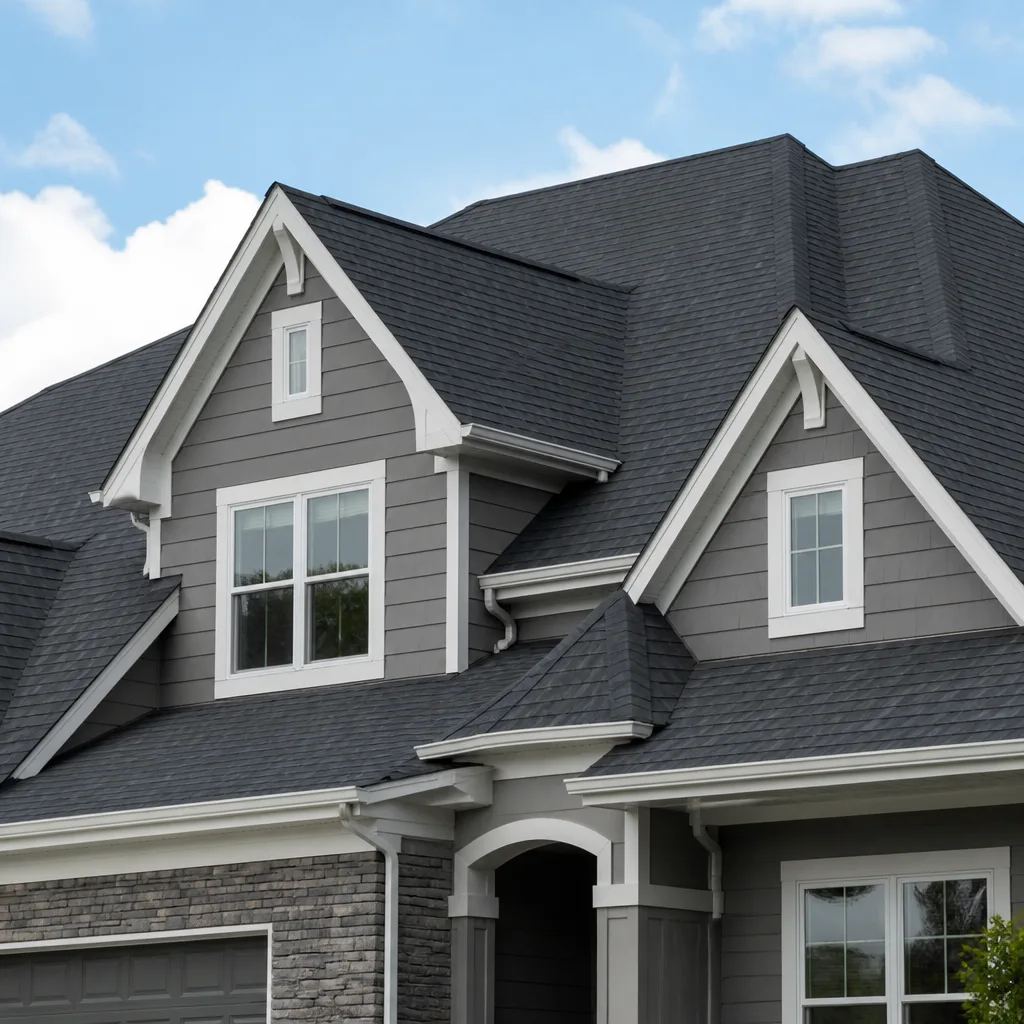
A roof replacement in Orange runs $7 to $14 per square foot of roof area, meaning a 2,400-square-foot roof lands between $16,800 and $33,600. That range covers architectural asphalt shingles from GAF, CertainTeed, Owens Corning, Atlas, or Tamko, which is what 85 percent of Orange homes use. Tile and metal systems, common on some higher-end Orange foothills properties, push costs to $18 to $35 per square foot.
Orange’s climate drives roofing decisions. The inland heat, regular marine-layer moisture, and the occasional Santa Ana wind event mean roofing underlayment matters as much as the shingle itself. A premium synthetic underlayment adds $800 to $1,500 over basic felt but seals far better against wind-driven rain. Proper ridge ventilation, which many older Orange homes lack as originally built, adds $1,200 to $2,500 and dramatically reduces attic heat load during July and August.
Labor is the largest single line item. Orange County roofing crews earn more than crews in the Inland Empire or Central Valley, and insurance costs for roofing contractors in California are among the highest in the nation. Shingle removal and haul-off on a 2,400-square-foot roof typically runs $4,000 to $6,000 before the first new shingle goes down. Decking replacement, if the existing plywood or OSB has water damage, adds $2.50 to $4.50 per square foot for the affected areas.
Roof Replacement Cost Ranges in Orange
- Architectural asphalt shingles (GAF, CertainTeed, Owens Corning, Atlas, Tamko, IKO): $7 to $11 per square foot installed
- Premium asphalt shingles with synthetic underlayment and upgraded ventilation: $10 to $14 per square foot installed
- Concrete tile (new installation): $18 to $28 per square foot installed
- Standing seam metal: $20 to $35 per square foot installed
- Tear-off and haul-away of existing roof: $4,000 to $6,000 for a 2,400-square-foot roof
- Decking repair or replacement: $2.50 to $4.50 per square foot of affected area
- Orange permit fee (roofing): $400 to $900 depending on valuation
One note that applies to all Orange roofing work: California’s Title 24 cool roof requirements apply to most residential replacements. Standard architectural shingles meet the requirement unless you choose very dark colors. If you want a specific aesthetic that doesn’t meet cool roof standards, you’ll pay a small penalty or need a compliant alternative. Your contractor should flag this, not discover it at inspection.
Window Replacement Costs: Orange Market Pricing Explained
Window replacement in Orange costs $750 to $1,600 per opening installed for mid-range vinyl or hybrid frames. A full 10-window replacement on a typical Orange ranch home runs $7,500 to $16,000. Premium lines from PGT with impact-rated glass, which more Orange homeowners are choosing after recent storm events, push costs to $1,200 to $2,200 per opening.
The glass package is where Orange homeowners overspend or underspend. Single-pane windows with aluminum frames, common in homes built through the 1980s, meet no modern energy standard. Dual-pane low-E glass is the minimum most Orange homeowners should consider, and it runs $350 to $600 per opening as an upgrade over basic dual-pane. Triple-pane glass, which delivers marginal additional benefit in Orange’s mild climate, rarely justifies its $400 to $800 per-opening premium unless the home faces constant freeway noise or sits directly under a flight path.
Installation method matters as much as the window itself. Retrofit installations that replace the sash and retain the existing frame cost 30 to 40 percent less than full-frame replacements but leave older flashings and weather barriers in place. In Orange, where the marine layer brings morning moisture for much of the year, full-frame installation with new flashing is the better long-term play, especially on homes with visible exterior stucco cracks or water staining below existing windows.
Window Cost Variables Specific to Orange
- Retrofit vinyl window, low-E dual pane: $750 to $1,100 per opening
- Full-frame vinyl window, low-E dual pane, new flashing: $1,100 to $1,600 per opening
- Premium window (PGT or similar), impact-rated glass: $1,200 to $2,200 per opening
- Stucco repair around full-frame replacements: $150 to $400 per window
- Orange permit fee (window replacement with frame work): $300 to $700
How Orange’s Permit System Drives Your Total Cost
Orange calculates building permit fees using a valuation-based schedule. The city assigns a per-square-foot construction valuation, multiplies it by your project’s square footage, and then applies a fee percentage to that total. For a kitchen remodel with a projected valuation of $90,000, permit fees including plan check, building, plumbing, mechanical, and electrical typically land between $2,000 and $5,500. For an ADU, fees plus school district assessments run $8,000 to $18,000. These are not optional line items, and contractors who say they’ll pull permits later are creating liability for you.
The school district fee deserves special attention. Orange is served by the Orange Unified School District, which levies fees on residential construction that adds livable square footage. Current 2026 fees run approximately $4.79 per square foot for new residential construction, which on a 600-square-foot ADU adds roughly $2,874 before other city fees. That number does not appear in most national cost guides.
Budget for plan check revisions. First-round plan check comments on Orange projects often require architectural or structural revisions, and each re-submittal carries a fee. Homeowners who budget $800 to $1,500 for plan check iterations avoid surprise line items midway through the design phase.
Orange Permit Fee Realities
- Kitchen remodel permits: $2,000 to $5,500 depending on scope and valuation
- Bathroom remodel permits: $800 to $2,200
- Roof replacement permit: $400 to $900
- Window replacement with frame work: $300 to $700
- ADU permits plus school district fees: $8,000 to $18,000
- Plan check revision fees per iteration: $150 to $400
Contractor Overhead and Margin: What’s Reasonable in Orange County
General contractor overhead and profit in Orange County’s competitive market runs 18 to 25 percent of total project cost. A GC quoting 10 percent is either running uninsured, paying subcontractors under the table, or planning to make up the difference in change orders. A GC quoting 35 percent is pricing for customers who don’t ask questions. The 18 to 25 percent band pays for general liability insurance, workers’ compensation, project management time, site supervision, the bookkeeping required by California’s contracting laws, and a reasonable return for the business taking the risk.
Overhead and profit is a line item, not a mystery. Quality contractors in Orange will show it on the bid. The ones who hide it inside inflated material costs make comparison impossible. When a bid says “project management” or “general conditions,” that’s overhead by another name, and you should ask what it covers. A legitimate general contractor in Orange carries general liability insurance with minimum $1 million per occurrence coverage and workers’ compensation for all employees, both of which cost more in California than in most states.
The difference between a general contractor and a coordinator matters here. A GC who subcontests everything to the lowest bidders and never visits the site is charging for phone calls, not construction. A GC with a project manager on site weekly, who reviews subcontractor work against plan and specification, who catches wrong-ordered materials before they’re installed, is charging for value. That’s what the overhead pays for.
How to Compare Bids Line by Line Without Losing Your Mind
Most Orange homeowners compare bids by looking at the bottom number. That’s a fast way to choose the wrong contractor. The right way is to compare scope, line items, allowances, and exclusions. Here’s the process we recommend to every Orange homeowner who asks us to bid against someone else.
- Ask every bidder for the same scope document format. If one bid has 12 line items and another has 40, the 12-line bid is hiding detail. The 40-line bid is telling you exactly what you’re buying.
- Compare material allowances line by line. A bid with a $4,000 plumbing fixture allowance and one with a $12,000 allowance are not competing for the same job. Ask each bidder to name the brands and models they’re pricing, not just category allowances.
- Look for what’s missing. No demo line? No haul-off? No permit line? No job site protection? Those costs will appear later as change orders, and change orders are where budgets die.
- Check the payment schedule. California caps the down payment a contractor can collect at 10 percent of the project total or $1,000, whichever is less. Any contractor asking for more upfront is violating state law.
- Ask about subcontractor relationships. Bids from contractors using the same trade crews, plumbing, electrical, tile, for years will go smoother than bids assembled from whichever sub answered the phone that week.
- Verify the overhead and profit line. If it’s missing, the contractor is burying it elsewhere. If it’s present, you can compare it directly and ask what it covers.
When bids come back wildly apart, the gap is usually in scope, not greed. Ask the high bidder what they saw that the low bidder missed. Often the answer is a structural issue, a code requirement, or a performance spec. The low bid may not be cheaper, it may just be wrong.
Common Mistakes to Avoid
- Basing budgets on national cost guides. Orange County labor and California regulatory costs run significantly above national averages. A $50,000 national-average kitchen will cost $70,000 to $90,000 here.
- Skipping the permit discussion during the estimate. Unpermitted work may save $2,000 to $5,000 upfront but creates disclosure problems at resale and can void homeowner’s insurance coverage on the affected systems.
- Signing a contract without a detailed scope of work. Change orders in Orange County average 10 to 20 percent of original contract value on poorly scoped jobs. Written line-item scopes prevent most of them.
- Choosing materials without understanding local conditions. Carpet in a bathroom near the coast, wood siding without proper moisture management, single-pane windows, these choices fail faster in Orange’s climate than manufacturers’ general guidance suggests.
- Ignoring the electrical panel capacity. Many Orange homes were built with 100-amp service. A major remodel often triggers a panel upgrade that should be in the bid from day one, not discovered during rough-in.
- Paying too much upfront. California law caps contractor down payments at 10 percent or $1,000, whichever is less. Anything beyond that is a red flag regardless of the contractor’s explanation.
- Treating the low bid as the winner by default. When one bid is 30 percent below the others, something is missing. The discipline is to find out what before signing anything.
See the difference
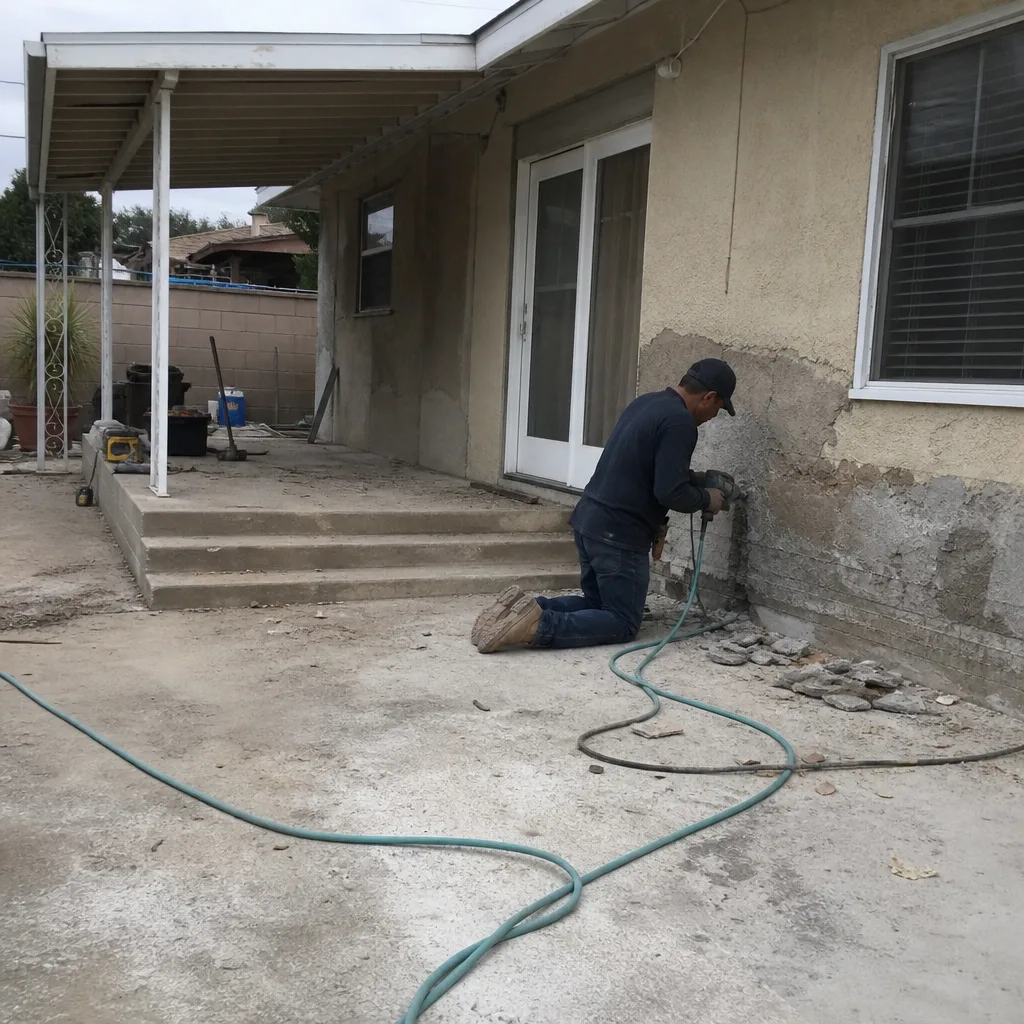 Before
 After
 Before
 After
 Before
 After
When to Call a Professional
If your project touches structural walls, plumbing, electrical, roofing, or exterior envelope work, you need a licensed California general contractor. These systems interact in ways that DIY work cannot safely address, and errors hide until they cause expensive damage. Permits require contractor verification in many cases, and insurance claims on unpermitted work often get denied. The Orange building department reviews plans for specific code compliance that most homeowners have never read. Iron Beam Contractors offers free estimates in Orange. Our team works across interior remodeling, exterior renovation, hardscape, and ADU installation, handling the permit process from submittal to final inspection. Call (833) 756-5936 to schedule a walkthrough of your project.
Frequently Asked Questions
A mid-range kitchen remodel in Orange runs $70,000 to $115,000, or $350 to $575 per square foot. The range covers semi-custom cabinetry, engineered stone countertops, mid-to-premium appliances, and standard electrical and plumbing updating. Call (833) 756-5936 for an exact quote on your specific layout, estimates are free.
ADUs in Orange cost $275 to $420 per square foot all-in, so a 600-square-foot unit runs $165,000 to $252,000. Site work, utility connections, Orange permit fees, and school district assessments all add cost beyond the structure itself. Call (833) 756-5936 for an exact quote on your property, estimates are free.
In Orange County, general contractor overhead and profit typically runs 18 to 25 percent of total project value. Numbers far below that signal skipped insurance or pending change-order games. Numbers far above that warrant a direct conversation. Call (833) 756-5936 for a written estimate with transparent overhead and profit, estimates are free.
Roof replacements in Orange run $7 to $14 per square foot for architectural asphalt shingles, meaning a 2,400-square-foot roof costs $16,800 to $33,600. The range includes tear-off, underlayment, shingles, ventilation upgrades, and Orange permit fees. Call (833) 756-5936 for a roof assessment specific to your home, estimates are free.
Yes, any Orange bathroom remodel involving plumbing fixture movement, electrical changes, or wall relocation requires a building permit. Permit fees for a standard bathroom remodel run $800 to $2,200. Call (833) 756-5936 to discuss your project, estimates are free.
The price should not change once work starts if the contract has a detailed written scope of work and material allowances, and if the contractor identified any hidden condition risks during the estimate. Work performed without a written line-item scope will almost certainly generate change orders. Call (833) 756-5936 for a written estimate with detailed scope, estimates are free.
The Bottom Line
Construction costs in Orange reflect real local conditions: Orange County labor rates, California’s regulatory environment, Orange’s permit fee schedule, and the material brands installed across this market. National cost guides fail here because they do not account for these layers. The homeowner who wins on a remodel in Orange is not the one who finds the lowest bid. It is the one who demands a detailed line-item scope, compares bids apples-to-apples, verifies the overhead and profit line, and chooses a general contractor who is accountable for every phase. One contractor, every phase. From blueprint to backyard.
Written by the team at Iron Beam Contractors, serving Orange since 2018.