
Last updated October 31, 2026
 Home additions & ADU
 Kitchen remodeling
 Bathroom remodeling
 Roofing
 Windows & doors
 Driveway & pavers
 Fence
Free written scope consultation - allowances, timeline, and change-order rules on paper before a single trade is scheduled
Construction Warning Signs: A Orange Homeowner’s Reference Guide
A diagonal crack above a door frame isn’t a drywall problem. It’s a load path problem, and painting over it is the most expensive cosmetic fix you’ll ever make. We’ve walked into enough Orange homes to know that most warning signs are surface symptoms. The actual failure, whether structural, moisture-driven, or system-related, sits one level deeper. This guide teaches you to read your home the way a contractor does, so you know what you’re looking at and what it’ll take to fix it properly.
Quick Answer
Construction warning signs in Orange homes fall into four categories: structural cracking that follows specific patterns, moisture intrusion that leaves distinct stains and mineral deposits, roof system failures you can spot from the ground, and code problems hidden inside walls from previous unpermitted work. The warning signs themselves are rarely the actual problem. They’re indicators of what’s happening beneath the surface, and treating them without diagnosing the cause multiplies repair costs.
Styles & brands we work with
Table of Contents
- Cracks That Mean Something vs. Cracks That Don’t
- Moisture Warning Signs Specific to Orange
- Roof Warning Signs You Can See From the Ground
- Interior Signs of a Previous Unpermitted Remodel
- Who to Call: Contractor, Structural Engineer, or Home Inspector
- Foundation Movement Patterns in Orange Soil
- Drainage and Grading Red Flags
- Material Failure Signs That Mimic Structural Problems
Cracks That Mean Something vs. Cracks That Don’t
Drywall and stucco crack in predictable ways. The pattern tells you whether you’re looking at cosmetic movement or a structural issue that needs immediate attention. In Orange, where summer temperatures regularly climb past 90 degrees and clay-heavy soils expand and contract with moisture cycles, homes move constantly. Some cracking is normal. Some is not.
Cosmetic cracks are thin, typically less than 1/8 inch wide, and follow straight lines along drywall seams or stucco control joints. They appear and disappear with temperature swings. You’ll see them most often on south-facing walls that get direct sun all day. These don’t pose any risk to the structure. They’re the result of thermal expansion, and fixing them is a quick tape-and-mud job or elastomeric stucco patch.
Structural cracks behave differently. Here’s what separates the two:
- Diagonal cracks radiating from door and window corners at a 45-degree angle indicate shear stress. The wall is trying to move, and the opening is the weak point where movement concentrates. If the crack is wider at one end than the other, the foundation is settling unevenly.
- Stair-step cracks in stucco that follow mortar joints on block walls mean differential settlement. One section of the foundation is moving independently of a neighboring section. In Orange neighborhoods built on expansive clay, we see this pattern most often on hillside lots or where irrigation oversaturates one corner of the yard.
- Horizontal cracks in foundation walls are the most serious. Lateral pressure from soil against the wall creates a bending force that concrete handles poorly. If you see a horizontal crack in an exposed stem wall, call a structural engineer. This is not a contractor-level guess.
As a general rule, if a crack is wider than 1/4 inch, growing longer month over month, or accompanied by doors and windows that suddenly stick or won’t latch, the crack is structural until proven otherwise. We’ve repaired dozens of Orange homes where a homeowner watched a diagonal crack for two years before calling, and a $600 foundation repair became a $9,000 wall reconstruction.
To learn more about how these issues fit into a bigger remodel picture, read about our Home Renovation in Orange approach.
Moisture Warning Signs Specific to Orange
Orange sits in a coastal Mediterranean climate, which means dry summers followed by intense winter rains. That cycle, combined with the region’s hard water, creates moisture warning signs that look different from what you’d see in wetter climates. Recognizing them early prevents mold, rot, and structural compromise.
Efflorescence on block walls is a white, chalky deposit that forms when water moves through masonry and evaporates on the surface, leaving salt minerals behind. In Orange, you’ll see it on the lower courses of block walls, especially retaining walls and planter boxes. Efflorescence itself is just a mineral, but it’s proof that water is traveling through the wall. Minor efflorescence on a freestanding garden wall built without a damp-proof course is common. Efflorescence on a foundation wall attached to your house, appearing after rain or irrigation, means water is wicking into your structure.
Stucco staining patterns tell you whether flashing failed or paint failed. Here’s how to read them:
- Dark staining below rooflines or above windows in a triangular pattern means failed flashing. Water is getting behind the stucco and running down the backside of the paper. Paint isn’t the fix. The flashing needs replacement, and the affected stucco section may need removal to dry out the sheathing.
- Uniform, fading discoloration across large wall areas is a paint failure. The stucco substrate is fine underneath. A proper wash, prime, and repaint solves it.
- Green or black streaks at the base of stucco walls indicate splash-back saturation. Sprinklers are hitting the wall directly, or the grade is directing water toward the foundation. Fix the source before repainting.
In Orange’s older neighborhoods, homes built before 1980 often lack the modern moisture barriers that newer construction includes. If you own one of these homes and see recurring moisture stains in the same location, assume the underlying paper is compromised until an inspection proves otherwise. Moisture warning signs in Orange homes don’t self-heal, and dry summers mask the damage happening inside wall cavities.
When a moisture issue intersects with other systems, it’s often best handled as part of a broader home remodeling in Orange scope, where framing, flashing, and finishes get addressed together.
Roof Warning Signs You Can See From the Ground
You don’t need a ladder to spot most serious roof problems. From the curb, with a good pair of eyes, you can identify the warning signs that precede leaks and structural roof failures. Orange’s dry climate keeps visible deterioration slower than coastal areas, but the temperature swings still take their toll on roofing systems that are 15 years or older.
Granule loss on asphalt shingles shows up as bare, dark patches on the shingle surface or an accumulation of granules in gutters and at downspout outlets. Asphalt shingles shed granules as they age, and once the granule layer thins significantly, UV rays degrade the asphalt itself. You’ll see this first on south-facing exposures, where Orange’s sun is harshest. If your gutters have a consistent layer of granules at every end cap when you clean them, start budgeting for reroofing.
Several manufacturers make quality replacement options, including CertainTeed and Owens Corning asphalt shingle lines, which we specify regularly when a Orange home’s roof has reached the end of its service life.
Ridge line sag is visible as a dip in the roof’s peak. A straight ridge means the roof structure is holding. A sag means the ridge board is undersized, the rafter ties have failed, or there’s moisture-compromised roof decking. Older Orange homes with original 2×4 rafters and short spans can develop ridge sag over decades. It’s a structural issue, not a shingle issue.
Fascia discoloration appears as dark streaks or paint peeling at the roof edge. This points to water wicking behind the gutter or poor drip edge installation. The fascia board, usually a 1×6 or 2×6, is the first wood to rot in a failing roof system. If the fascia is soft when pressed in several spots, water intrusion has already started.
If you notice any of these three signs, get a roofer on-site. Roof issues compound quickly once water breaches the underlayment. For a broader picture of what a full exterior envelope project entails, see our General Contractor in Orange page.
Interior Signs of a Previous Unpermitted Remodel
Orange’s housing stock includes thousands of homes built between 1950 and 1985, and a significant number of them have had work done without permits. Homeowners did what made sense at the time, but unpermitted work often contains code violations that become warning signs of hidden structural or fire-safety problems. Here’s what to look for inside your home.
- Walls that don’t align with the floor below or above. If a wall on the second floor sits in the middle of a room on the first floor, someone moved it without proper structural support. Load-bearing walls transfer weight straight down through continuous paths. When that path is broken, the load redistributes to floor joists that weren’t designed for it.
- A wide opening without a visible header. Knocking on the drywall above a doorway or archway should tell you if solid lumber sits there. A hollow sound means the wall was opened and the header was never installed or was undersized. We’ve opened up walls in Orange homes where the “header” above a 6-foot opening was two flat 2x4s. The ceiling sag above that opening is the warning sign.
- Sagging ceilings directly below a former wall line. When a wall is removed, the floor or ceiling joists that were supported by it drop. You’ll see a straight indentation in the ceiling running in one direction. This is the joists telling you they’re overloaded.
- Outlets on interior walls with no visible wiring path. If an electrical outlet sits on a wall but there’s no obvious route back to the panel, unpermitted wiring was likely run through framing without proper stapling or conduit. This is a fire-safety risk, not just a convenience issue.
- Missing fire blocking in open walls. If you’re doing any remodel work and see an open wall cavity that runs continuously from floor to ceiling with no horizontal blocking, that section was never inspected. Fire blocking slows vertical fire spread. In framed construction, it’s required at 10-foot intervals.
- A beam that’s visibly undersized. If you see exposed lumber in a garage or basement and the beam spanning the garage door opening is a 4×6 where you’d expect a 4×12, you’re looking at a failed engineering decision. Cracks in the beam or sag are the warning signs of an imminent structural problem.
If any of these signs are present, call a licensed general contractor who’s seen Orange’s housing stock in its original form and knows what was and wasn’t code in any given decade. For help assessing this, review our Home Renovation in Orange process.
Who to Call: Contractor, Structural Engineer, or Home Inspector
One of the costliest mistakes Orange homeowners make is calling the wrong professional first. Each specialist costs different amounts and provides different types of answers. Choosing the right one saves you time and money.
Call a structural engineer when you see horizontal foundation cracks, significant ridge sag, a beam that’s cracked or split, or any indication that the home’s load path has been compromised. The engineer will calculate actual load requirements, specify repair details, and stamp the plans. In Orange, a structural engineer’s evaluation typically costs $500 to $1,500 depending on scope. Their report is the document you’ll need for any permitted repair work.
Call a home inspector when you’re buying a home and want a general condition assessment, or when you need an objective third-party opinion before making a claim. The inspector identifies symptoms but doesn’t design fixes. Their report is broad but shallow. That’s appropriate for a purchase decision, but not for solving an active problem.
Call a general contractor when you already know what the issue is and need it repaired, or when you suspect multiple interconnected problems and need someone who can diagnose and then execute the full scope. For example, if moisture stains on an exterior wall are accompanied by an interior crack, you have two related problems that need one coordinated repair. At Iron Beam Contractors, we scope this work as a single project with a single point of accountability, pulling in specialty trades as needed, from stucco repair to framing to drainage correction.
A quick rule: if the problem is a question, start with an engineer for structural, a contractor for everything else. If the problem is a known repair, call the contractor.
Foundation Movement Patterns in Orange Soil
Orange’s geology is a patchwork of clay loam, sandy loam, and alluvial soils deposited by the Santa Ana River watershed. That variability means two homes a block apart can experience completely different foundation behavior. Clay soils, common in many Orange neighborhoods, are expansive. They swell when wet and shrink when dry. The result is seasonal foundation movement that manifests as cracks that open in late summer and close, partially, after winter rains.
Here’s the specific movement pattern to watch:
- Soil around the perimeter pulling away from the foundation in late summer is classic expansive clay shrinkage. The soil contracts, the outer edge of the foundation settles, and interior walls develop diagonal cracks at door corners. If you see a gap of an inch or more between soil and foundation, the clay content is high and your watering patterns are part of the problem.
- Heaving at the center of a slab happens when moisture collects under the interior of the home, usually from a plumbing leak or poor drainage, and the clay expands upward. Signs include upward bowing of floor tiles in a specific area, a fireplace that cracks from the bottom up, and doors that bind at the top. This is not settling. It’s the opposite, and it usually points to a leak.
- Differential settlement between the front and back of the house shows up as a continuous crack running vertically through the stucco at the point where the two sections meet, often near the center of the home’s length. In Orange, many homes have expansive clay at one end and sandy loam at the other, so one end moves seasonally while the other doesn’t.
Preventing foundation movement starts with managing water. Maintain consistent soil moisture around the perimeter, keep downspouts and French drains functioning, and don’t plant deep-rooted trees within 15 feet of the foundation. If movement patterns are already established, a structural engineer can measure the actual differential and specify whether underpinning, piering, or simple drainage correction is required.
Drainage and Grading Red Flags
Water is the single biggest long-term threat to any Orange home, and the warning signs are almost always visible in the yard if you know what grade should look like. Code requires positive drainage: the ground must slope away from the foundation at a minimum of 6 inches of fall over the first 10 feet. Most Orange homes built before 1990 don’t meet this. The result is water that pools near the stem wall, saturates backfill, and enters the crawl space or wicks up through the slab.
Numbers to check on a Saturday morning:
- Measure the grade. Place a 10-foot straight board on the ground perpendicular to the foundation, with one end against the wall. The far end should be at least 6 inches lower than the near end. If it’s level or slopes toward the house, you have a grading problem.
- Check downspout discharge. Every downspout should extend at least 5 feet from the foundation, either through an above-ground extension or a buried pipe. Short 90-degree elbows that dump water at the wall are the most common drainage failure we see in Orange.
- Look at the soil line. Dirt should sit 4 to 6 inches below the top of the foundation stem wall. If soil covers the weep screed on stucco or sits above the slab edge, water and insects have a path into the home.
- Inspect the crawl space. If you can access it, look for standing water, mud staining on piers, or a persistent damp smell. Any of those three means water is getting under the house during the wet season, even if the dry season hides the evidence.
Drainage correction isn’t glamorous, but it prevents the warning signs we’ve covered in every other section. We regularly fold drainage work into broader home remodeling in Orange projects because the most beautiful kitchen in the world doesn’t matter if the foundation under it is failing.
Material Failure Signs That Mimic Structural Problems
Not every scary warning sign is structural. Some are material failures that look structural but have much simpler fixes, and knowing the difference prevents overpaying for a repair you don’t need.
Drywall nail pops appear as small, circular bumps, usually in a line, on walls and ceilings. They’re a fastening failure, not a framing failure. The lumber dried and shrank after installation, or the fasteners were overdriven. A nail pop that appears suddenly and in large numbers across a whole room can indicate a moisture problem, but isolated pops are cosmetic and easily repaired.
Crazing in stucco is a network of hairline cracks, often in a spiderweb pattern, across a large area. It’s a curing problem from the original install, not a structural issue. Water can eventually enter through crazing, so it should be sealed or refinished, but the walls aren’t failing.
Wood flooring gaps that open and close seasonally are the result of humidity changes. Orange’s dry summers pull moisture from wood, and floors shrink. When humidity returns, they expand. This is normal for solid hardwood. It isn’t foundation movement unless the gaps are accompanied by cracks in walls or doors sticking.
Ceiling drywall cracks along tape joints are often truss uplift. In homes with engineered roof trusses, the bottom chord lifts slightly when the top chords are cold and the attic space warms, usually at night in winter. The drywall, attached to the truss, cracks along the perimeter where it meets walls. It’s a thermal issue, not a structural one.
For exterior installations where material selection matters as much as installation quality, we specify products from IKO and Atlas for certain applications when manufacturer warranties and performance specs align with the project’s requirements.
Common Mistakes to Avoid
- Painting over active cracks without diagnosing the cause. Paint hides the symptom for a month. Then the crack reappears, wider and now behind a coat of paint that cost you time and materials. Fix the cause first.
- Assuming all cracks in Orange are “just the clay soil.” Expansive soil is real, but it produces specific patterns. A diagonal crack at a door corner with a sticking door isn’t normal soil movement. It’s differential settlement that needs evaluation.
- Spot-repairing stucco without replacing failed flashing. If water got behind the stucco because flashing failed, patching the surface traps moisture inside the wall cavity. You’ve converted a visible problem into a hidden one that rots framing.
- Ignoring granule loss because “it doesn’t leak yet.” By the time a roof leaks, the decking beneath may already be compromised. Granule loss is the early warning that replacement is coming. Schedule it before water does the damage.
- Fixing drainage last. Most Orange homeowners we work with want to fix the visible crack first and the drainage second. That’s backwards. If the drainage isn’t corrected, the crack repair fails within two years.
- Calling a handyman for structural work. A handyman can hang drywall and paint. They cannot diagnose load path failures, specify beam sizes, or pull permits in Orange. Structural work requires a licensed contractor or engineer.
See the difference
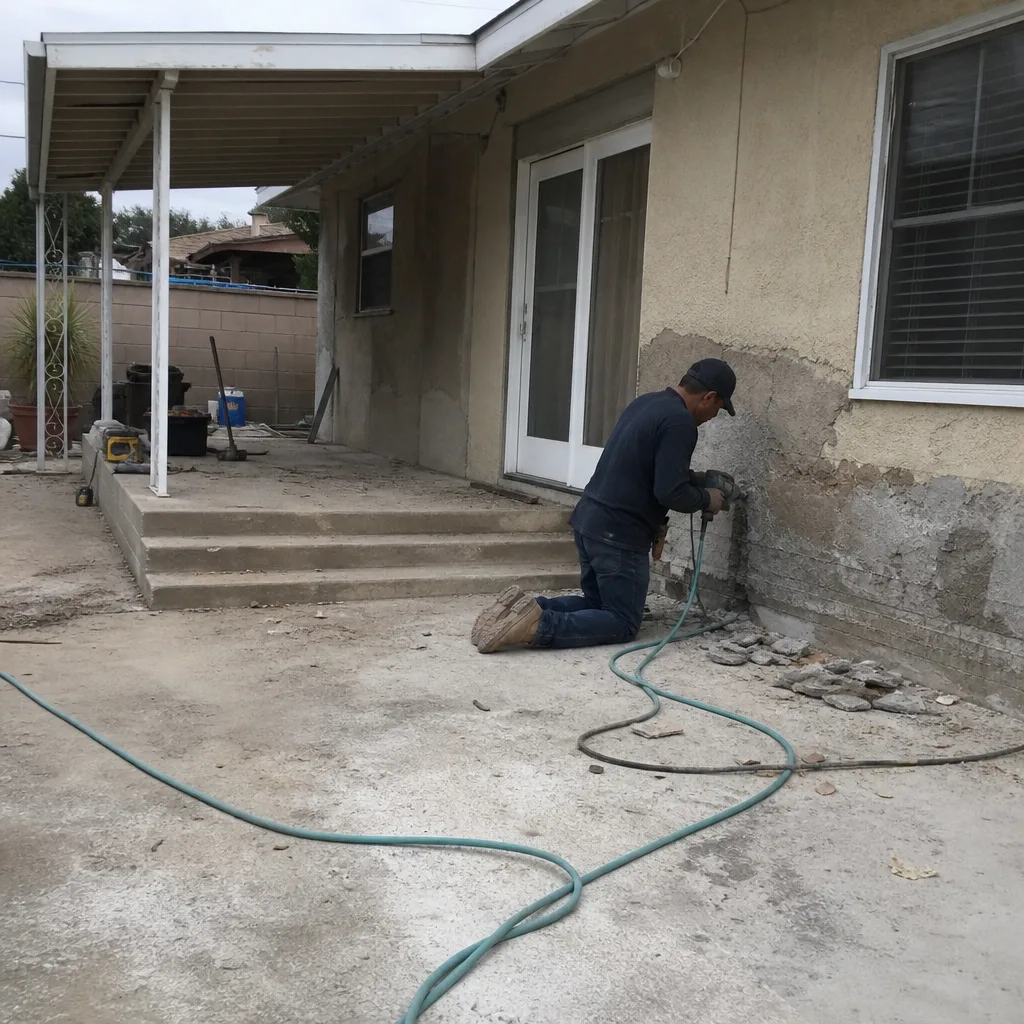 Before
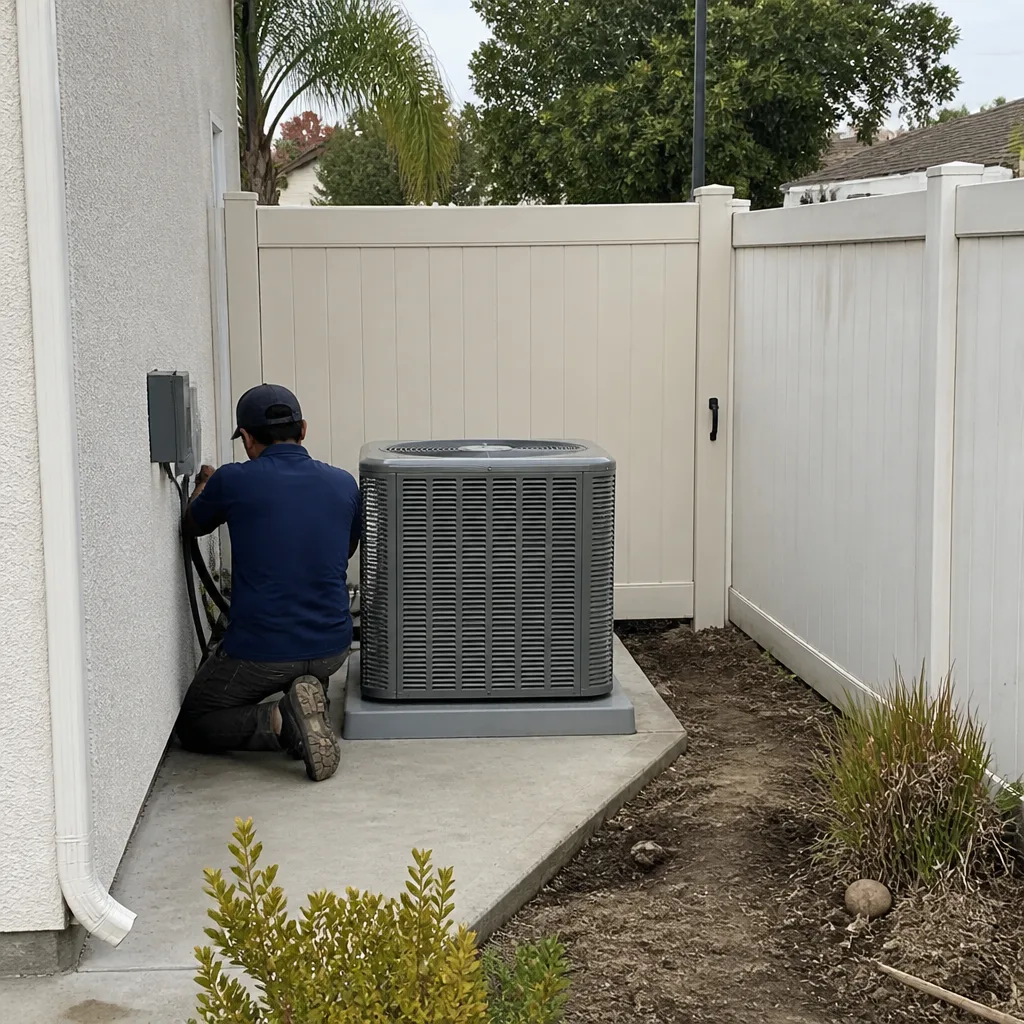 After
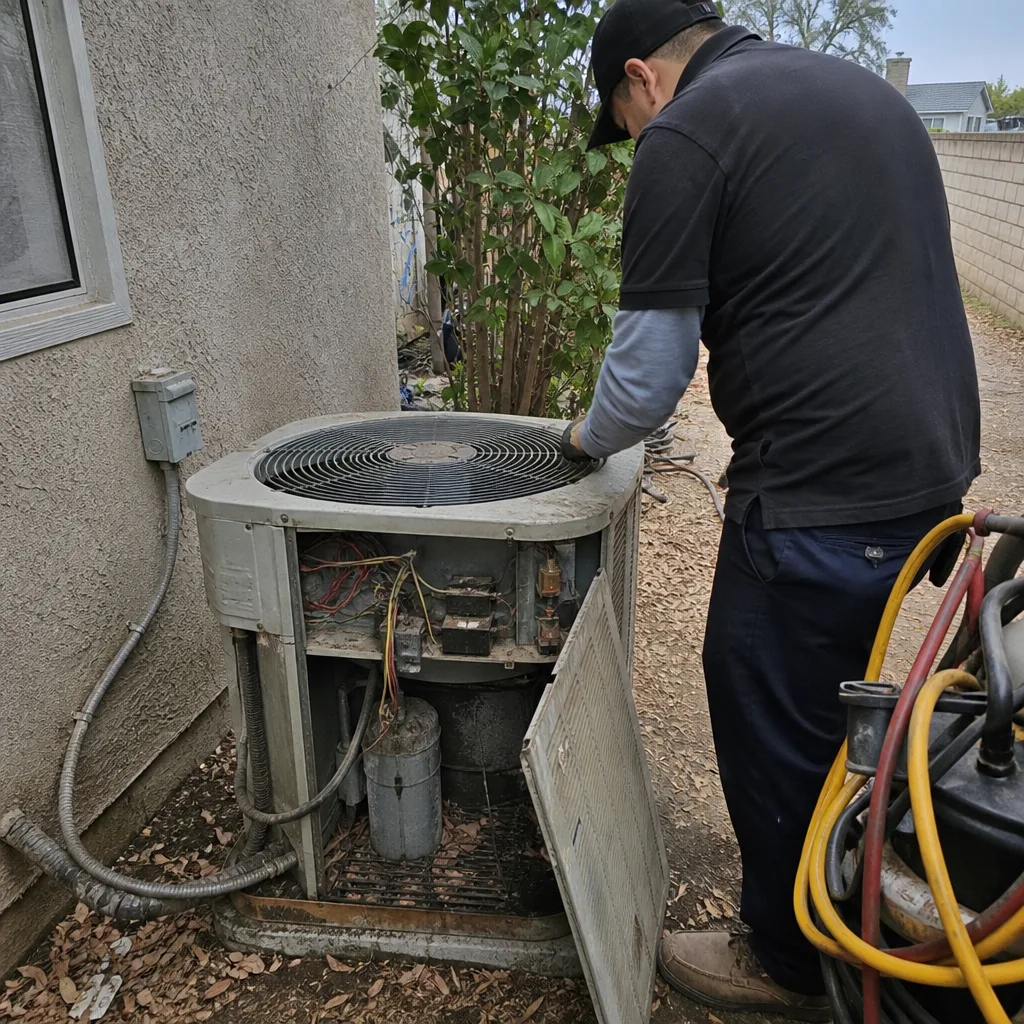 Before
 After
 Before
 After
When to Call a Professional
Call a professional when you see any crack wider than 1/4 inch, any horizontal foundation crack, moisture staining that reappears after repainting, granule loss concentrated on one exposure, or any evidence of unpermitted structural work from a previous owner. These are not DIY diagnoses. A general contractor can evaluate the full scope and bring in structural engineers or specialized trades as needed. Iron Beam Contractors offers free estimates in Orange. Call (833) 756-5936 to schedule yours. One contractor, every phase.
Frequently Asked Questions
Structural crack repair in Orange typically ranges from $800 to $3,500 depending on whether the fix requires epoxy injection, stucco patching with lath replacement, or more extensive wall reconstruction. If the crack is caused by foundation movement, the foundation repair itself starts around $4,000 and goes up from there. Call (833) 756-5936 for an exact quote on your specific crack pattern. Estimates are free.
A structural crack runs diagonally from door or window corners, is wider than 1/4 inch, and is often accompanied by doors or windows that stick. Settling cracks are thin, run along drywall seams or stucco control joints, and don’t change much month to month. If you’re unsure, get a professional evaluation. The cost of a wrong guess is higher than the cost of the evaluation.
Signs of water damage behind stucco include dark triangular staining below rooflines or windows, efflorescence on the surface, bubbling or peeling paint that recurs after repainting, and a musty odor inside adjacent rooms. Any of these means water has entered the wall cavity at some point. The fix requires removing the affected stucco, repairing the flashing or moisture barrier, and replacing any rotted framing. Call (833) 756-5936 for a professional assessment.
Yes, you can sell a Orange home with unpermitted work, but you must disclose it, and it will affect the sale price and buyer pool. Worse, if unpermitted work created a code violation that causes a structural or safety problem, that becomes a liability. The safest path is to identify unpermitted work before listing, understand what violations exist, and either correct them or price the home accordingly.
Call a structural engineer when you see horizontal foundation cracks, significant ridge sag, a cracked or split beam, or any sign that the home’s load path has been compromised. The engineer provides stamped calculations and repair specifications. A contractor executes the repairs the engineer specifies. If you call a contractor first, they’ll likely recommend the engineer for anything structural, so start with the engineer for structural questions.
Walk your home’s perimeter and interior at least twice a year, once at the end of summer when dry conditions have maximized soil shrinkage and once after the first major winter rain. Check the same spots each time: foundation perimeter, roofline, door corners, and any location where you’ve previously seen cracks or staining. Consistent, scheduled observation catches new warning signs before they become expensive problems. Call (833) 756-5936 if you find something questionable during your walk-through.
The Bottom Line
Your Orange home speaks in patterns. Diagonal cracks, efflorescence deposits, granule loss on south-facing shingles, sagging ridges, and walls that don’t align are all messages about what’s happening beneath the surface. Learn to read them and you’ll catch problems when they’re hundred-dollar fixes instead of five-figure reconstructions. When a warning sign is structural or points to multiple interconnected issues, one accountable general contractor managing the full scope beats coordinating separate trades on your own. For a home that needs answers, Iron Beam Contractors home is where the diagnosis starts. Call (833) 756-5936 for a free estimate in Orange.
Written by the team at Iron Beam Contractors, serving Orange since 2018.